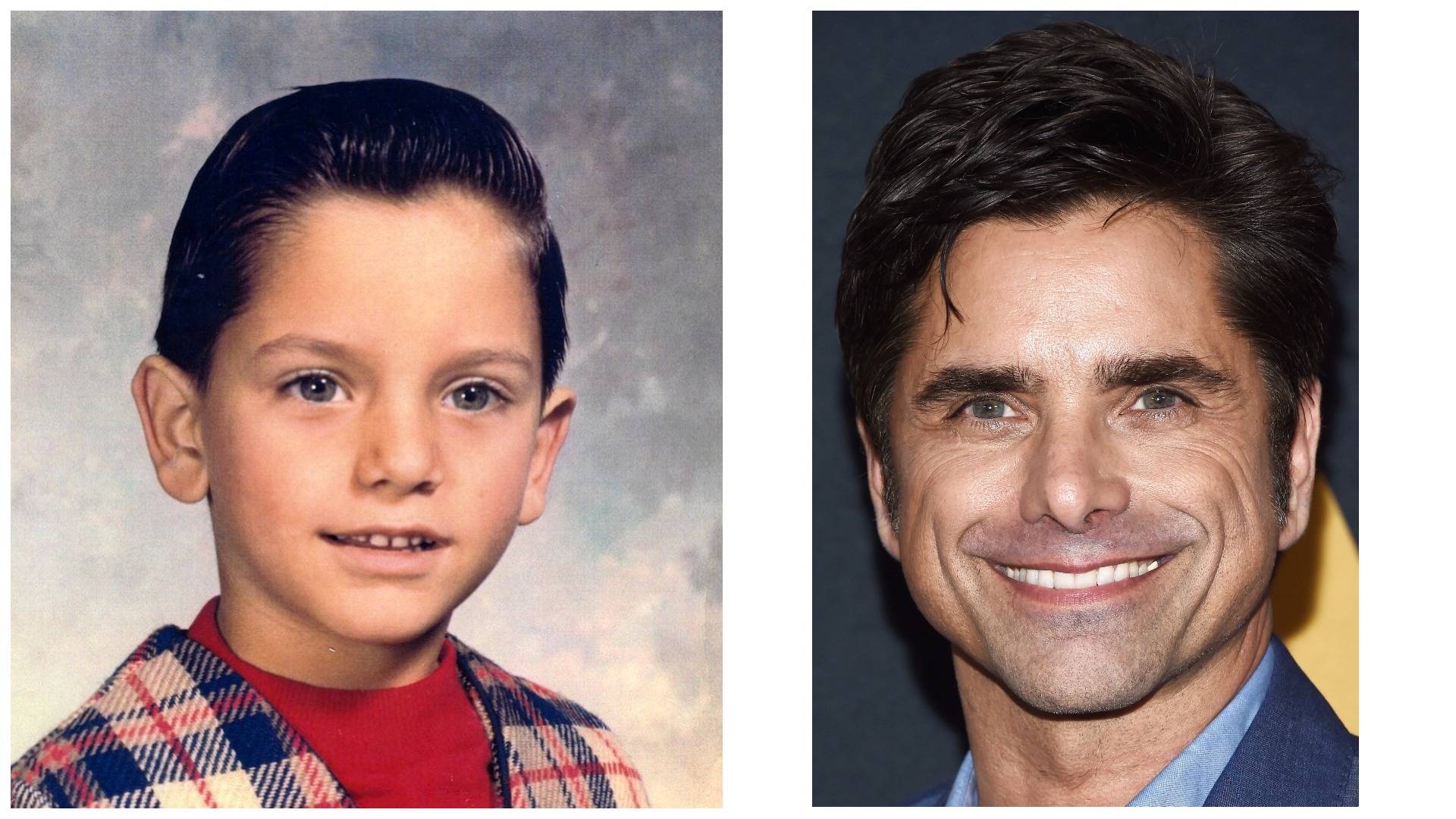
Long before John Stamos became one of television’s most recognizable faces, he was a smiling boy growing up in Southern California, far from Hollywood spotlights. Born in Cypress, California, he was raised in a close Greek American family that valued hard work, loyalty, and tradition. His childhood photos show a bright eyed kid with an easy smile, the kind of boy teachers remembered and neighbors trusted.

As a child, John was energetic, curious, and deeply drawn to music. Few people know that before acting ever entered his life, he dreamed of becoming a drummer. He practiced relentlessly and even performed with local bands, believing music would be his future. Acting was never part of the plan.
After high school, he enrolled in college, but fate had other ideas. On a whim, he auditioned for a daytime soap opera. That single decision changed everything. At just 19 years old, he landed a role on General Hospital, instantly becoming a fan favorite. Viewers were captivated by his charm, confidence, and natural screen presence.
Overnight, the shy California kid turned into a national sensation. Fame came fast, and with it came pressure. John later admitted he was overwhelmed by sudden success and struggled to stay grounded. Still, he pushed forward, determined not to become another short lived teen idol.
Then came the role that defined a generation. When he appeared as Uncle Jesse on Full House, he didn’t just play a character. He became a cultural phenomenon. His leather jacket, motorcycle, and soft heart turned him into the ultimate 90s crush. Teen magazines couldn’t print his photo fast enough.
But behind the scenes, John was working harder than ever. He insisted on incorporating music into his character, fighting for scenes where he could sing and play guitar. That creative push helped shape Uncle Jesse into an icon rather than a stereotype.
What many fans did not see was the discipline behind the smile. John showed up early, learned every line, and treated every role seriously. He was determined to earn respect, not just applause. Even when critics tried to box him into sitcom roles, he kept evolving.

After Full House ended, his career took unexpected turns. He starred in dramas, comedies, and Broadway productions. He proved he could sing live, act on stage, and carry complex emotional roles. Slowly, the heartthrob label began to fade, replaced by something stronger.
As he grew older, John faced personal losses that reshaped his outlook on life. The death of his parents deeply affected him, making family his top priority. He often speaks about gratitude, legacy, and the importance of staying kind in an industry that can be ruthless.
In later years, he embraced nostalgia with confidence rather than embarrassment. His return in Fuller House showed a man comfortable with his past and proud of his journey. Fans noticed something different. The charm was still there, but now it came with wisdom.
Off screen, John became a devoted husband and father. He openly shares how becoming a dad changed his perspective on success. Fame mattered less. Time mattered more.
Today, when people look at his childhood photo next to his present day image, the transformation feels almost cinematic. The smile is still there. The warmth is still real. But behind it is a lifetime of lessons, risks, and resilience.
Conclusion
From a cheerful California boy to a global television icon, John Stamos proves that lasting fame is built on passion, patience, and heart. His story is not just about good looks or lucky breaks. It is about growth, gratitude, and staying true to who you were before the world started watching.